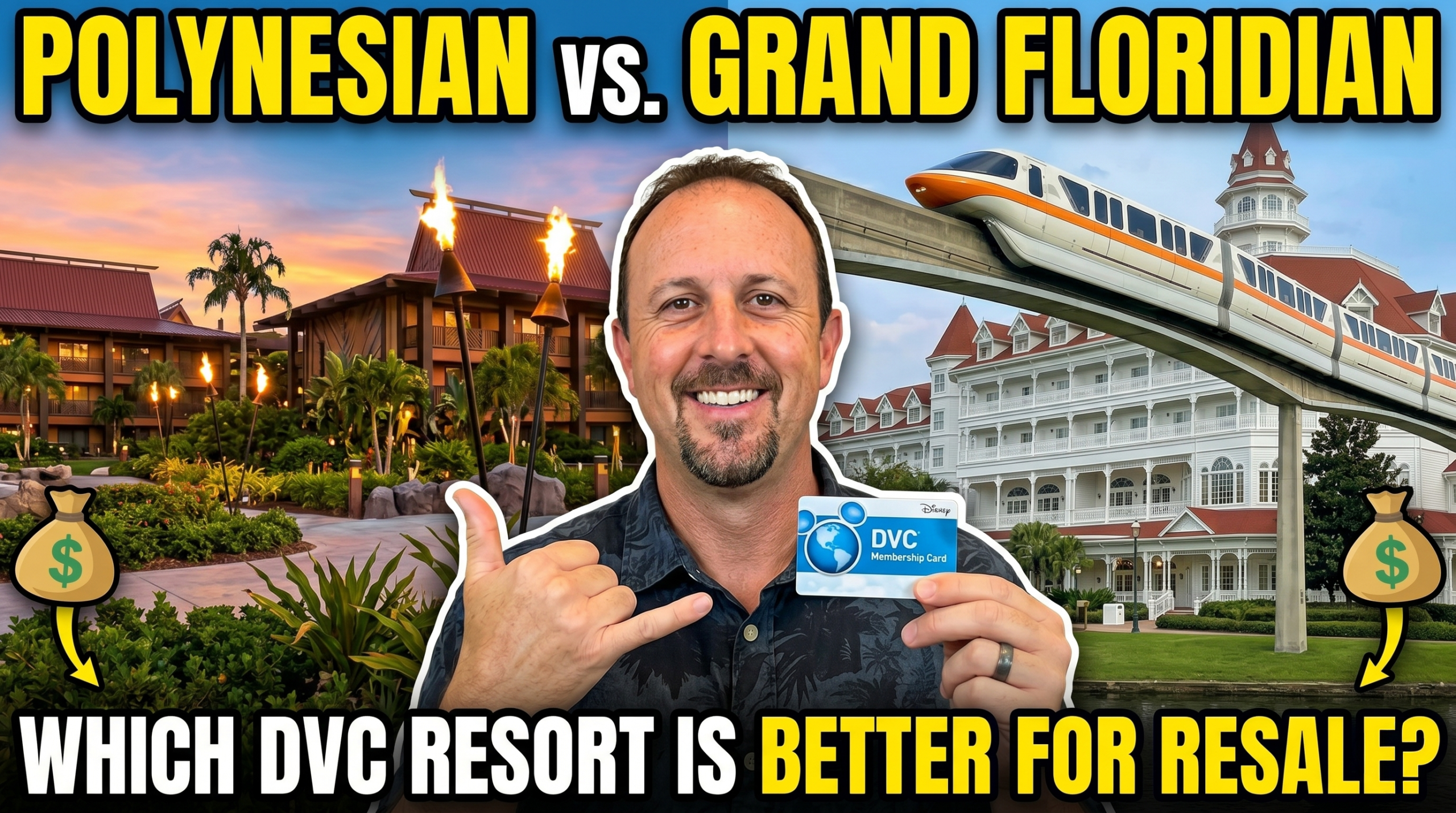

Polynesian vs. Grand Floridian: Which Monorail DVC Resort is Better for Resale?
DVC Resort Comparison · Premium Monorail Resorts
If you’re weighing Polynesian vs. Grand Floridian, you’re already deep into premium territory. These are not casual purchases. Most people don’t casually land here unless they’ve done at least some homework on Disney Vacation Club resale. And once you’re here, the decision gets a little less obvious than expected.
At first glance, it feels like a vibe choice. Tropical versus Victorian. Relaxed versus refined. But that’s not really the decision you’re making. Not entirely.
What tends to get overlooked is the ownership side. Contracts, dues, booking patterns. The stuff that doesn’t show up in Instagram photos. That’s where this comparison actually gets interesting.
So instead of focusing on surface-level differences, let’s walk through how these two resorts behave over time. That’s what really matters.
Most buyers get pulled into the look and feel first. That’s normal. But resale decisions usually come down to how ownership actually works over time, not just where you stay.
If you’re still getting familiar with how all of this works, it helps to start with a clear breakdown of the fundamentals. This guide on Disney Vacation Club ownership basics walks through the key concepts before you dive deeper into resale decisions.
At a Glance
The Core Differences
| Polynesian | Grand Floridian | |
| Vibe | Tropical, lived-in | Victorian, refined |
| Room Inventory | Mostly studios | Studios → Grand Villas |
| Annual Dues | Lower | Higher |
| Contract End | 2066 | 2064 (varies) |
| Resale Liquidity | Faster movement | Narrower buyer pool |
01 — First Impressions
Resort Overview: Location, Theme, and First Impressions
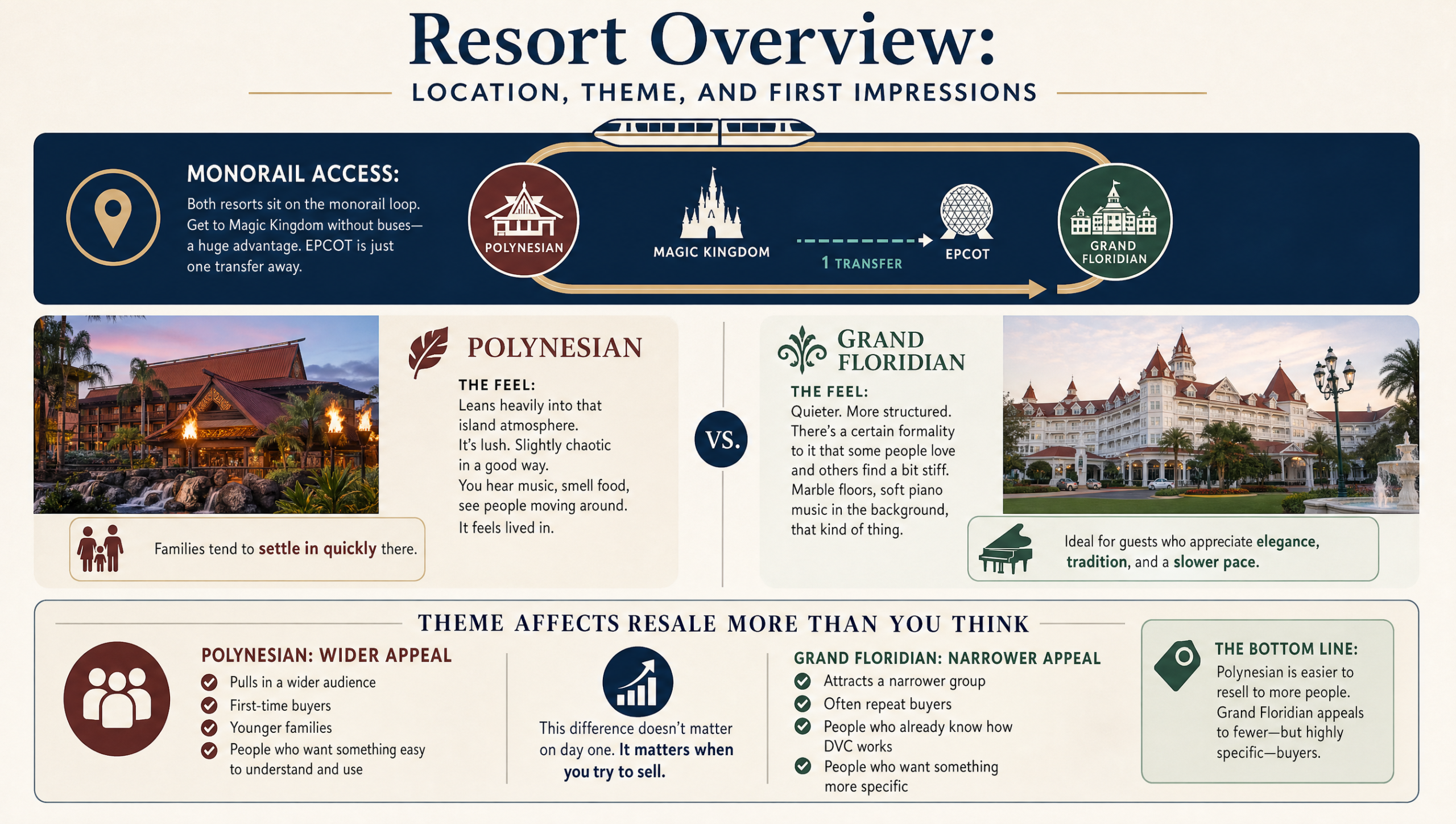
Both resorts sit on the monorail loop. That alone puts them in a different category. You can get to Magic Kingdom without buses, which, if you’ve done Disney before, you know is a big deal. EPCOT access is also easy, just one transfer away.
Now, the feel. That’s where things split.
Polynesian leans heavily into that island atmosphere. It’s lush. Slightly chaotic in a good way. You hear music, smell food, see people moving around. It feels lived in. Families tend to settle in quickly there.
Grand Floridian is quieter. More structured. There’s a certain formality to it that some people love and others find a bit stiff. Marble floors, soft piano music in the background, that kind of thing.
“Theme actually affects resale more than expected. Polynesian pulls in a wider audience. Grand Floridian attracts a narrower group. That difference doesn’t matter on day one — it matters when you try to sell.”
Polynesian tends to pull in a wider audience. First-time buyers. Younger families. People who want something easy to understand and use. Grand Floridian attracts a narrower group. Often repeat buyers. People who already know how DVC works and want something more specific.
02 — Room Inventory
Polynesian vs. Grand Floridian: Room Types and Layout Differences
When comparing Polynesian vs. Grand Floridian, room inventory quietly becomes one of the biggest decision drivers. It’s not flashy, but it shapes everything.
Polynesian
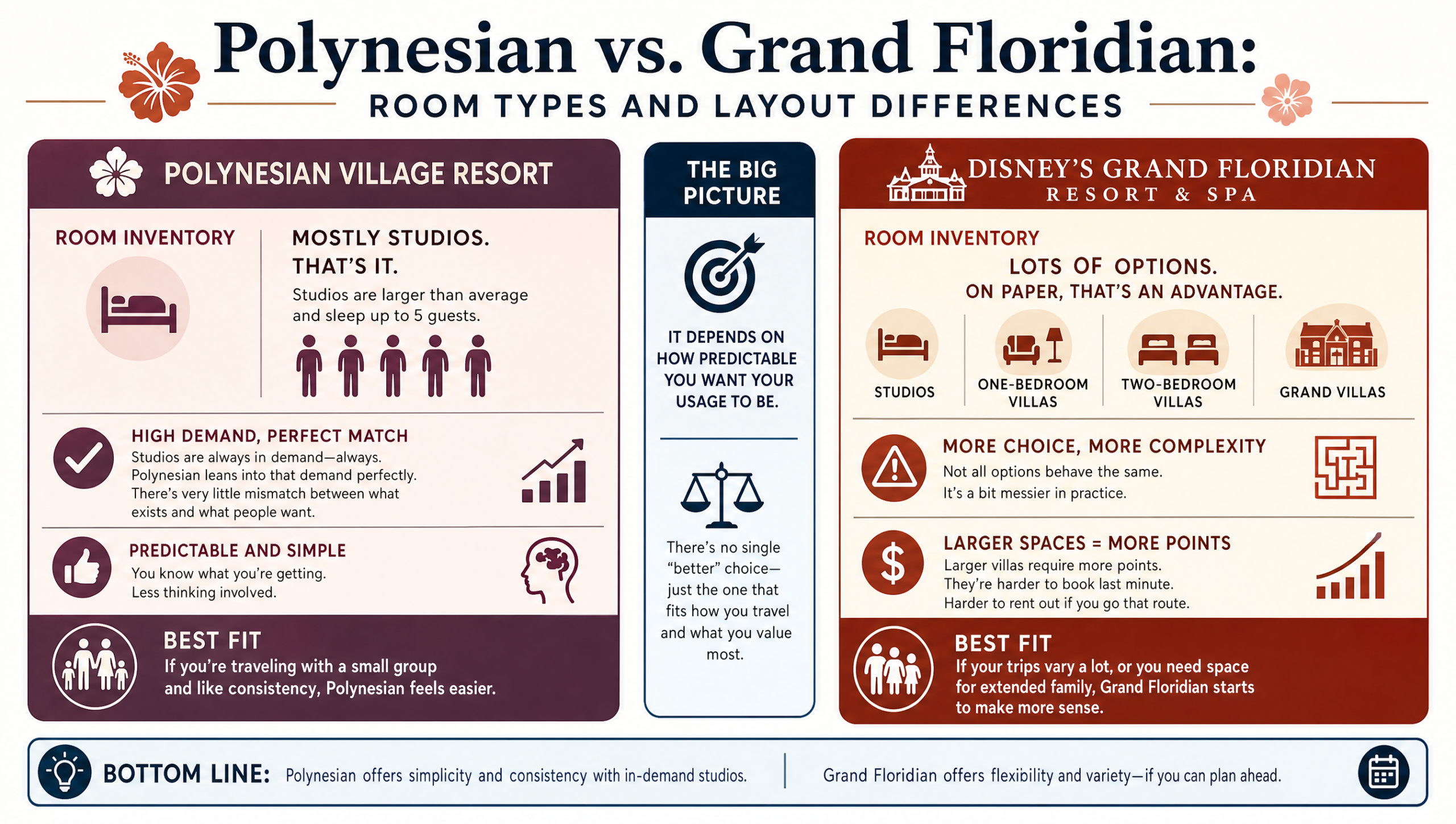
Studios. Mostly.
Larger than average and they sleep five — a big reason families gravitate here. It’s simple. You know what you’re getting.
Grand Floridian
The Full Spectrum.
Studios, one-bedrooms, two-bedrooms, even Grand Villas. On paper, more choice. In practice, more decisions to make.
Studios are always in demand. Always. So Polynesian leans into that demand perfectly. There’s very little mismatch between what exists and what people want.
Grand Floridian gives you options, but not all options behave the same. Larger villas require more points. They’re harder to book last minute. Harder to rent out if you go that route.
So what’s “better”? It depends on how predictable you want your usage to be. If you’re traveling with a small group and like consistency, Polynesian feels easier. If your trips vary a lot, or you need space for extended family, Grand Floridian starts to make more sense.

03 — The Numbers
Point Costs, Dues, and Long-Term Value
This is usually where the conversation gets serious. Or at least, it should.
Both resorts come with high resale prices. No surprise there. But Grand Floridian typically edges higher per point. Then there are annual dues. And those matter more than most buyers expect.
Dues don’t stay flat.
Slowly, then not so slowly.
Polynesian generally has lower dues. Not dramatically lower, but enough that over 20 or 30 years, the difference becomes noticeable. Thousands of dollars, realistically.
Grand Floridian sits higher. You’re paying for the positioning, the amenities, the perception of luxury. Some buyers are fine with that. Others start questioning it a few years in.
If you want a clearer picture of how costs build over time, this long-term timeshare cost analysis breaks down how maintenance fees can compound over the years and impact overall ownership value.
Lower dues at Polynesian make it easier to justify ownership even if you skip a year or two of travel. It feels less like pressure. Grand Floridian can still hold value because of its reputation. There’s a certain ceiling it tends to maintain. But you’re carrying more cost along the way.
Over a 20 to 30-year ownership period, those dues don’t just sit still. They compound in a way that catches people off guard, especially if you haven’t mapped out the full cost picture ahead of time.
Before finalizing any resale purchase, it’s worth understanding the extra fees involved. This breakdown of DVC closing costs explains what you’ll actually pay beyond the listing price and where those expenses come from.
04 — Availability
Booking Availability and Demand Patterns
This part tends to catch people off guard.
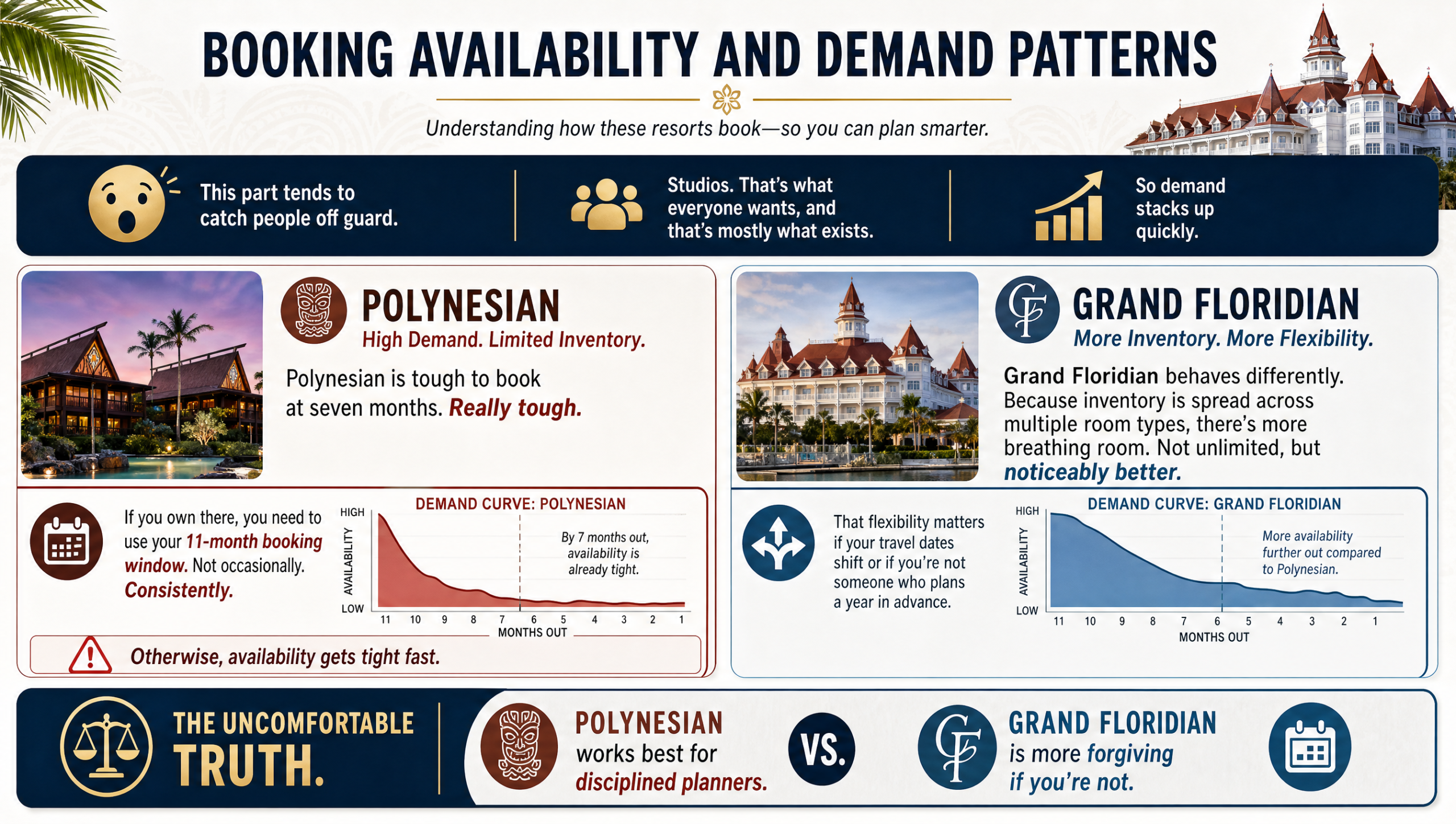
Polynesian is tough to book at seven months. Really tough. And the reason is simple. Studios. That’s what everyone wants, and that’s mostly what exists. So demand stacks up quickly.
If you own there, you need to use your 11-month booking window. Not occasionally. Consistently. Otherwise, availability gets tight fast.
Grand Floridian behaves differently. Because inventory is spread across multiple room types, there’s more breathing room. Not unlimited, but noticeably better. That flexibility matters if your travel dates shift or if you’re not someone who plans a year in advance.
Polynesian works best for disciplined planners. Grand Floridian is more forgiving if you’re not.
05 — Resale Market
Polynesian vs. Grand Floridian: Resale Market Trends
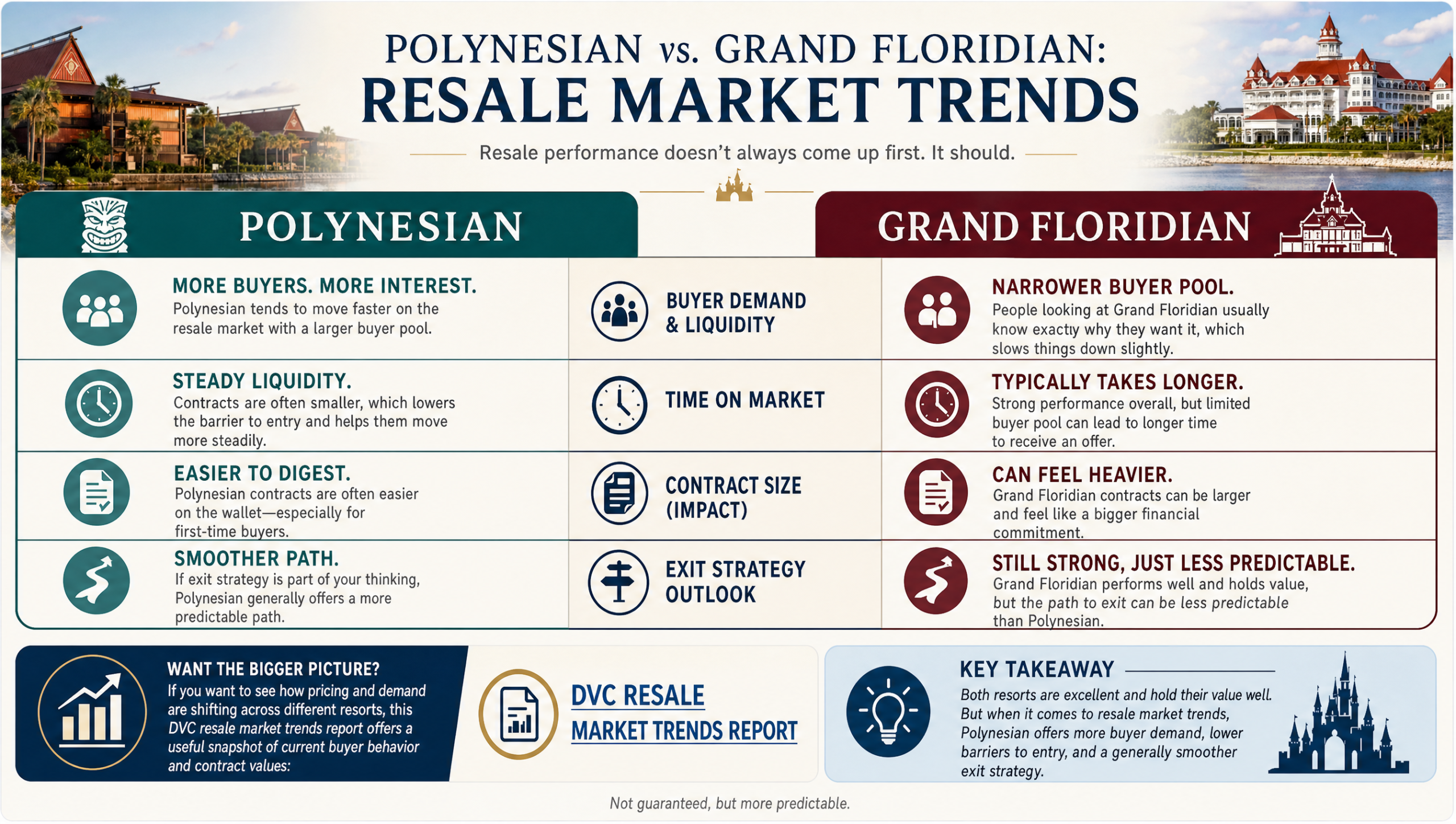
When people talk about Polynesian vs. Grand Floridian, resale performance doesn’t always come up first. It should.
Polynesian tends to move faster on the resale market. More buyers. More interest. Contracts are often smaller, which lowers the barrier to entry. That combination creates liquidity. Not instant, but steady.
Grand Floridian still performs well. It’s not struggling by any means. But the buyer pool is narrower. People looking at Grand Floridian usually know exactly why they want it. That slows things down slightly.
If you want to see how pricing and demand are shifting across different resorts, this DVC resale market trends report offers a useful snapshot of current buyer behavior and contract values.
Another detail that quietly matters is contract size. Polynesian contracts are often easier to digest financially. Grand Floridian contracts can feel heavier, especially for first-time buyers.
So if exit strategy is part of your thinking, Polynesian generally offers a smoother path. Not guaranteed, but more predictable.
06 — Daily Experience
Amenities, Dining, and Experience Value
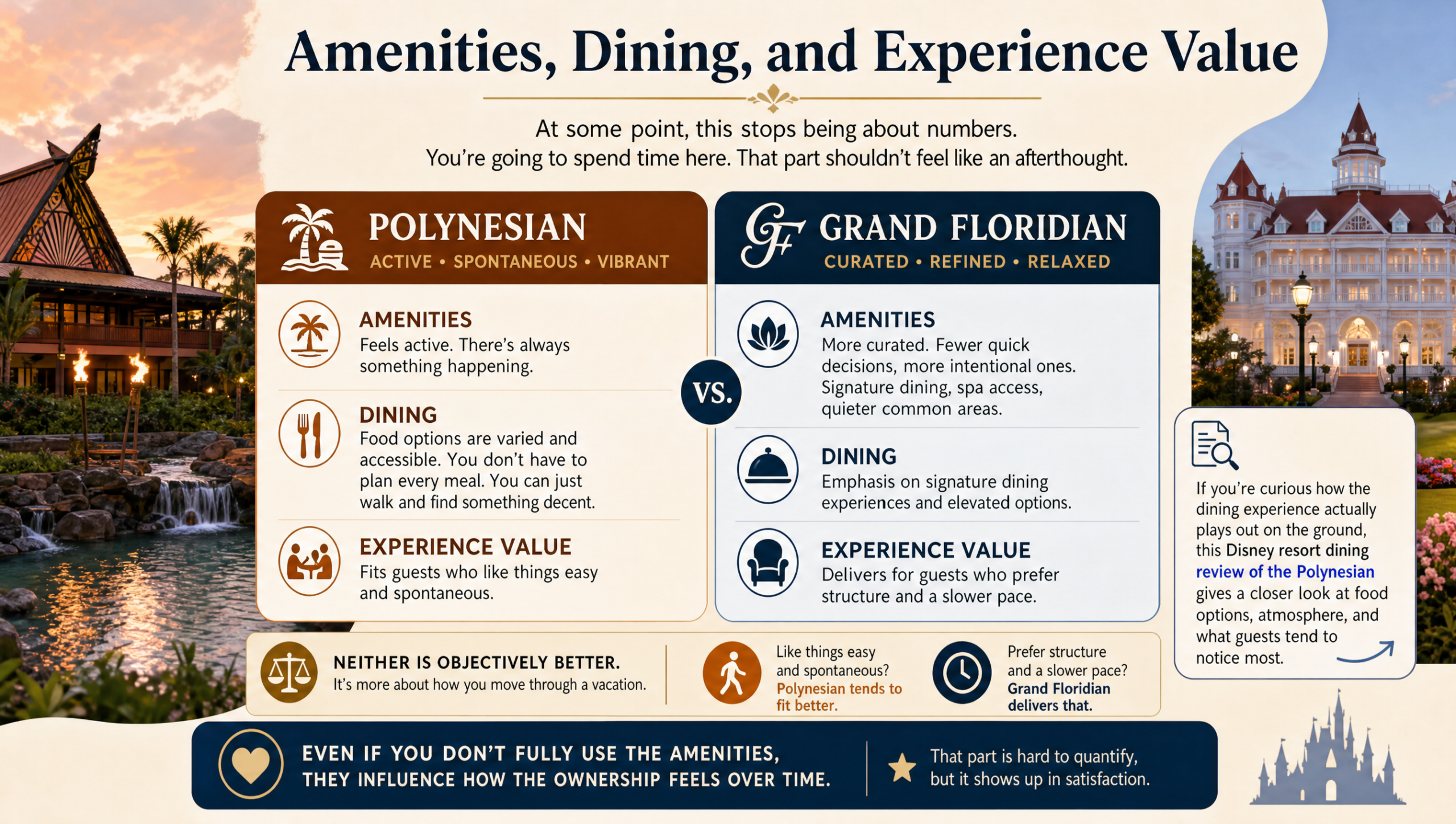
At some point, this stops being about numbers. You’re going to spend time here. That part shouldn’t feel like an afterthought.
Polynesian feels active. There’s always something happening. Food options are varied and accessible. You don’t have to plan every meal. You can just walk and find something decent.
Grand Floridian is more curated. Fewer quick decisions, more intentional ones. Signature dining, spa access, quieter common areas.
Neither is objectively better. It’s more about how you move through a vacation. If you like things easy and spontaneous, Polynesian tends to fit better. If you prefer structure and a slower pace, Grand Floridian delivers that.
If you’re curious how the dining experience actually plays out on the ground, this Disney resort dining review of the Polynesian gives a closer look at food options, atmosphere, and what guests tend to notice most.
Even if you don’t fully use the amenities, they influence how the ownership feels over time. That part is hard to quantify, but it shows up in satisfaction.

07 — The Long Horizon
Contract Expiration and Long-Term Ownership Strategy
This is where decisions stretch out over decades, not just vacations.
Polynesian
2066
Contract end year
Grand Floridian
2064+
Varies by building
On paper, that’s a small difference. In reality, every year counts when you’re paying upfront. If you’re considering financing part of your purchase, this guide to vacation loans outlines common options, interest considerations, and what to watch for before taking that route.
Longer contracts mean more use. That’s obvious. But they also mean more years of dues. That part tends to get glossed over.
So what should you prioritize? If you’re younger or planning long-term usage, those extra years matter. If you’re buying with a shorter horizon, maybe not as much.
Most people don’t align contract length with their actual travel timeline. That’s where things drift off track.

08 — Making the Call
Polynesian vs. Grand Floridian: Which One Should You Choose?
This is usually where people want a clear answer. One winner. It doesn’t really work that way.
Comparing Polynesian vs. Grand Floridian comes down to how you travel, not which resort is “better” in general.
Quick Decision Matrix
Choose Polynesian if…
You want simplicity. Lower dues, strong demand, easy-to-understand usage. Your trips are small and consistent. You book early and travel the same way every year.
Choose Grand Floridian if…
You want flexibility and a more refined experience. Your group sizes vary. You’re willing to take on higher ongoing costs in exchange for more room types and a quieter atmosphere.
There’s no shortcut here. It’s about matching the resort to your habits.

09 — Real Scenarios
A Few Real-World Scenarios That Change the Decision
This is the part people usually skip. They compare features, maybe glance at dues, then decide. But real usage rarely follows a clean plan.
Let’s say you travel every year, same time, same group size. In that case, Polynesian tends to feel almost frictionless. You book early, lock in a studio, and you’re done. There’s very little second-guessing. That consistency matters more than it sounds on paper.
Now flip that scenario. Your travel dates move around. Some years it’s just you and a partner. Other years, extended family joins. That’s where Polynesian can start to feel limiting. Not immediately. But over time, you notice it.
Grand Floridian handles that variability better. You’re not locked into one room type. You can scale up or down depending on the trip. The tradeoff, of course, is complexity. You’ll think more about how you use your points. Some people like that control. Others find it exhausting.
There’s also the question of how often plans change. Life happens. Flights shift. Schedules don’t line up. Polynesian owners who miss that 11-month window sometimes feel stuck. It’s not that you can’t book anything. It’s that you might not get what you expected. Grand Floridian gives you a bit more breathing room in those situations.
10 — What Buyers Miss
The “Hidden” Resale Reality Most Buyers Miss
Here’s something that doesn’t get talked about enough.
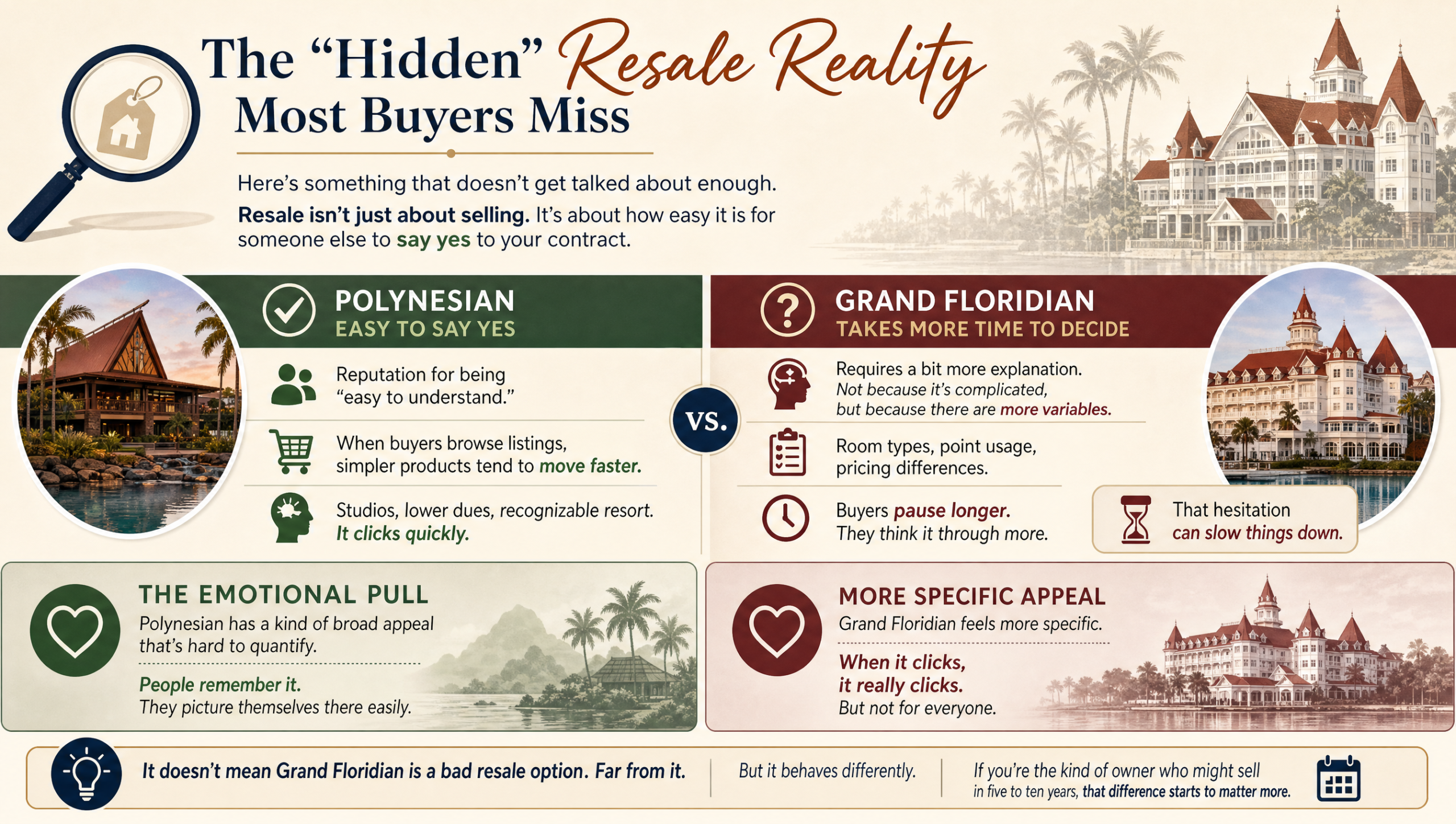
Resale isn’t just about selling. It’s about how easy it is for someone else to say yes to your contract.
Polynesian has a reputation for being “easy to understand.” That sounds minor, but it matters. When buyers browse listings, simpler products tend to move faster. Studios, lower dues, recognizable resort. It clicks quickly.
Grand Floridian requires a bit more explanation. Not because it’s complicated, but because there are more variables. Room types, point usage, pricing differences. Buyers pause longer. They think it through more. That hesitation can slow things down.
It doesn’t mean Grand Floridian is a bad resale option. Far from it. But it behaves differently. If you’re the kind of owner who might sell in five to ten years, that difference starts to matter more.
Another subtle point is emotional pull. Polynesian has a kind of broad appeal that’s hard to quantify. People remember it. They picture themselves there easily. Grand Floridian feels more specific. When it clicks, it really clicks. But not for everyone.

11 — Years In
How Expectations Shift After a Few Years
This is where things get interesting.
Early on, most buyers are focused on the purchase itself. Price per point. Availability. Maybe a few dining options. That’s normal. But after a few years, priorities shift.
People start noticing how easy it is to actually use what they bought. Not theoretically. In practice. That’s where Polynesian tends to age well. It stays simple. You don’t have to rethink your strategy every year.
Grand Floridian can feel more rewarding, but also more involved. You’re making more decisions. Sometimes that’s a good thing. Sometimes it just feels like extra work.
There’s also a psychological side to dues. Even small differences start to feel bigger over time. Especially in years when you don’t travel as much. Owners don’t always anticipate that feeling upfront.
None of this shows up in a brochure. But it shows up in long-term satisfaction.

12 — Before You Decide
A Quick Reality Check Before You Decide
If you’re still torn between Polynesian and Grand Floridian, that’s normal. Most people are.
Try this instead of overanalyzing specs. Picture your next three trips. Not your ideal trips. Your realistic ones. Who’s going? When are you traveling? How far in advance are you actually booking?
If those answers are consistent and predictable, Polynesian usually fits better. If those answers change year to year, Grand Floridian starts to make more sense.
It’s not a perfect method. But it’s closer to how ownership actually plays out.
And honestly, that’s what you’re buying into. Not just a resort. A pattern you’ll repeat for years.
Conclusion
It’s Not About the Resort. It’s About the System.
The Polynesian vs. Grand Floridian decision isn’t really about which resort looks better. That’s the easy part. It’s about how ownership plays out over time.
Polynesian tends to be more efficient. Lower dues, simpler booking patterns, broader resale appeal. It’s easier to live with long term. Grand Floridian offers more flexibility and a different kind of experience. But it asks more from you financially and requires a clearer sense of how you’ll use it.
Most people think they’re choosing a resort. In reality, they’re choosing a system they’ll deal with for years.
So the better question isn’t which one is best. It’s which one you’ll still be happy managing five, ten, even twenty years from now.
Ready to Find Your DVC Contract?
Let’s Talk Through Your Options
At Magical Vacation Pros, we’ve helped hundreds of families buy and sell DVC contracts at both Polynesian and Grand Floridian. We know how each resort behaves on the resale market — and we’ll help you choose the one that fits how you actually travel.
 |
About the Author Kenny SmithBroker #01726372Disney Vacation Club specialist and founder of Magical Vacation Pros, where he helps families navigate the DVC resale market with confidence. With years of experience brokering contracts across every Disney Vacation Club resort, Kenny has guided hundreds of buyers and sellers through the ROFR process, contract closings, and long-term ownership planning. Have a question about DVC resale? Reach out to Kenny and the Magical Vacation Pros team anytime. |